How a Retired Midwife With 40 Years of Experience Helped Me Stop Living in Fear of My Fibroids, Understand My Own Body for the First Time, and Make a Health Decision I Was Finally Proud Of
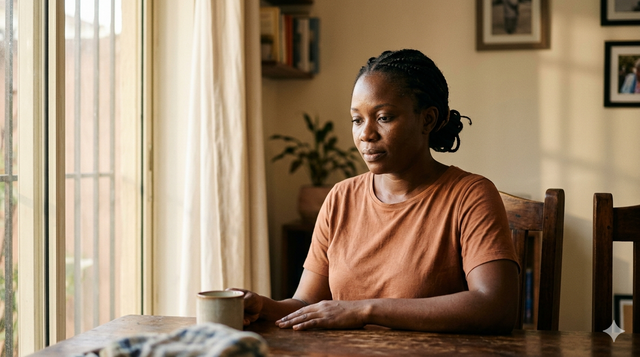
If you received a fibroid diagnosis and you have not slept properly since — read every word on this page.
If you have been sitting on information you don't fully understand. If you have nodded along in a doctor's office while your heart was racing and your mind was blank. If you have driven home from a consultation feeling more lost than when you arrived — this is for you.
If you have typed your symptoms into Google at midnight and immediately wished you hadn't. If you have fallen into forums full of horror stories and come out the other side more frightened, not less. If you have watched YouTube videos that used words you needed a medical degree to understand — keep reading.
If your mother says "just remove it." If your sister says "leave it, it will go." If your husband says he supports whatever you decide but you can see in his eyes that he doesn't quite understand, and you don't know how to explain it to him because you don't fully understand it yourself — this page is for you.
If you have tried to make a decision — surgery, medication, monitoring, natural approaches — and every time you get close to a decision, a new piece of conflicting information stops you cold. If you are trapped in a loop of fear and indecision that is slowly wearing you down — I know exactly where you are standing.
Because the fibroids are not the only thing draining you.
It is the not knowing. The endless, grinding not knowing.
You cannot enjoy your days fully because the question is always there. Sitting in the back of your mind at the dinner table. Following you into the bathroom. Waking you up at 3am when the house is quiet and the fear gets louder.
And the people around you — even the ones who love you — cannot help you. Because they don't understand it either. And so you carry it alone.
That loneliness is its own kind of suffering. Separate from the physical symptoms. Heavier, in some ways, than the pain itself.
You were handed a diagnosis. Nobody handed you a map.
And without a map, every direction feels equally dangerous.
"I know that feeling. I lived inside it for two years. And I know the exact moment it ended — not when the fibroids disappeared, but when someone finally sat down and explained to me what I was actually dealing with."

My name is Mary Adeyemi.
I am not a doctor. I have no medical qualifications. I am a 41-year-old woman from Ibadan who spent two years of her life drowning in fibroid fear — and I am writing this because I eventually found dry land.
I am a secondary school teacher. I have been married for eleven years. I have two children. I live a quiet, ordinary, full life — or I did, until the day a routine scan revealed something my doctor described as "multiple intramural fibroids" and my entire sense of my own body changed overnight.
I did not know what intramural meant. I did not know what multiple meant in this context. I did not know if I should be terrified or calm. My doctor told me to "monitor it" and "come back in six months." He shook my hand and called the next patient.
I sat in my car outside the clinic for forty-five minutes before I could drive.
Over the next two years, I spent close to ₦340,000. Consultations with three different specialists — each with a different opinion. A hormonal medication regimen that made me feel unlike myself for four months. Two separate herbal supplement courses recommended by people who meant well and knew nothing. One very expensive second opinion that told me nothing the first opinion hadn't already said.
I read everything. Medical journals I could not fully understand. Nigerian health blogs. International fibroid support groups. I joined three WhatsApp groups for women with fibroids. I left all three of them because they frightened me more than they helped me.
None of it gave me what I actually needed.
Not a single doctor, in two years, sat down with me and explained — in plain language, as if I was a human being and not a file — what fibroids actually are, why they grow, what the different types mean, what my specific situation meant for my specific life, and how to think clearly about my options.
They told me what. Nobody told me why. Nobody told me how to think about it.
And my marriage was feeling it. Quietly, slowly. My husband Tunde is a good man. Patient. But I had become someone he did not quite recognise — distracted, anxious, unreachable in ways I could not explain. There was a conversation we needed to have that I did not know how to start because I did not have enough understanding to begin it.
I was not just living with fibroids. I was living inside fear of fibroids. And those are two very different things.
It was at my colleague Folake's mother's burial that everything changed.
In Yoruba tradition, the burial of an elderly mother — especially one who lived a full life — is not a time of only grief. It is a gathering. Extended family from every corner. Women who have not seen each other in decades, reunited over food and memory and the particular intimacy that only loss can create. It was the kind of event where conversations happen that would not happen anywhere else — where guards come down and truths surface.
I had attended to support Folake. I was not planning to talk about myself at all. I rarely did, when it came to this.
But there was a woman there — Mama Remi, a retired midwife in her late sixties who had delivered babies across Oyo State for four decades. She had been a friend of Folake's mother and had come from Ogbomoso. She had that particular quality that some older women carry — a stillness, a watchfulness, the kind of attention that makes you feel both seen and safe at the same time.
We ended up seated near each other during the afternoon, under the shade of a canopy while the younger women moved food and the older men made speeches. I was quiet, which was unusual for me. I was thinking — as I always was, those days — about my next appointment, about the decision I still hadn't made, about the question that followed me everywhere.
Mama Remi looked at me for a moment and said, simply: "Something is sitting on you, my daughter."
It was not a question. It was an observation. And it was so accurate, so quietly devastating in its accuracy, that I felt the back of my throat tighten.
I looked away quickly. I blinked hard. I was not going to cry at Folake's mother's burial over my own problems.
I have never been so grateful for a canopy's shadow.
What She Said Next Changed the Way I Understood My Own Life
Later that evening, after the food had been cleared and the gathering had thinned, Mama Remi found me where I was helping to stack chairs near the gate. She touched my arm gently and steered me to a quieter place, away from the remaining noise.
She looked at me for a moment. Then she said the six words I needed to hear more than any other words in those two years:
"Understanding your body is not complicated. Being left without information is what makes it complicated."
I started crying. Right there, near a stack of plastic chairs at a burial, with the sound of the generator and distant conversation. Not the polite kind. Not the kind you perform. The kind that has been building for two years and finally finds a crack in the wall and pours out.
She waited. She handed me a small handkerchief from her bag — the kind older Yoruba women always carry — and she waited until I was ready.
Then she spoke.
I wiped my eyes. I asked her: "But how do you stop being afraid when you don't know what to do?"
This is the thing that changed everything for me — and that nobody had said out loud before:
Fibroid fear is almost never about the fibroids themselves. It is about information deprivation. When a woman doesn't understand what she has — what type, what it means, what drives it, what her real options are — her mind fills the gap with the worst possible interpretation. Always. That is what minds do with empty space.
And the tragedy is that the information exists. It is not secret. It is not complicated. It is not beyond a woman without a medical degree. It simply has never been presented to Nigerian women in plain, accessible, human language — organised in a way that takes you from panic to understanding in a logical sequence.
When you understand your fibroids, you can have a real conversation with your doctor. You can ask real questions. You can evaluate real options. You can make a real decision. You stop reacting in fear and you start responding with intelligence. That shift — from passenger to driver — is everything.
I drove home from that burial a different woman. Not because anything had changed physically. But because one sentence had cracked open a way of thinking about my situation that I had never had access to before.
I had spent two years trying to make a decision without the foundation of understanding that the decision required. It was like trying to choose a route on a map I had never been allowed to see.
Mama Remi spent the following Sunday afternoon with me — two hours at her kitchen table in Ogbomoso, with tea and biscuits and more honesty than I had received in two years of expensive consultations. She explained fibroids the way she had explained things to thousands of women in her forty years of practice. Plainly. Humanly. Without jargon. Without rushing.
She explained what fibroids are and why they develop. She explained the different types and what each one typically means. She explained what drives them and what the research actually says. She explained every major treatment option — surgical and non-surgical — with honest, unvarnished assessments of what each involves, who it suits, and what the evidence shows. She explained how to think about your own situation — your age, your symptoms, your fertility plans, your tolerance for different approaches — so that you can have a real, informed conversation with a doctor rather than just sitting there nodding.
By the time I left her kitchen, I had made my decision. Not because she told me what to decide. But because I finally had enough understanding to decide for myself.
The First Few Days: The Same Fear, But With One Difference
I want to be honest with you. The understanding Mama Remi gave me did not make the fear disappear overnight.
Day 1. I went home and I sat with everything she had told me. I wrote it all down. I pulled out my old scan reports and read them again — and for the first time, I could follow what they were saying.
Day 2. I still had moments of anxiety. Old habits of fear don't dissolve in forty-eight hours. But I noticed something different: when the anxiety rose, I could reason with it now. I could say — this is what this means. This is what this does not mean. That was new.
Day 3. I made a list of questions. A real list — not "what do I do?" but specific, informed, targeted questions that came from actual understanding. I looked at that list and I barely recognised myself. This was not the woman who had sat frozen in a doctor's office for two years.
Day 4. I called to book an appointment. For the first time since my diagnosis, I was not dreading it.
Day 5: Something Shifted
The appointment was on Day 5. I walked in with my list of questions. I sat down across from the consultant and I began asking them — one by one, calmly, clearly.
He looked at me differently. I could see it. He slowed down. He stopped reaching for his prescription pad. He actually answered me — fully, properly, as if I was a person capable of receiving and processing information. Because I was. Finally.
I drove home and called my husband from the car park.
"It went well," I told him. And then: "I finally understand what is happening."
He was quiet for a moment. And then: "I can hear it in your voice."
Day 6. Day 7. Then Something Broke Open.
By the end of the first week, I had made my decision. Not a panicked decision. Not a pressured decision. A considered, informed, confident decision that I owned completely and that I could explain to anyone who asked — including my mother, who had been pushing for surgery, and my sister, who had been pushing to "just leave it."
I explained it to both of them. Calmly. With the actual information. And they were quiet in the way people go quiet when they realise they have been giving advice about something they didn't fully understand.
And then one morning I woke up and I made tea and I sat at the kitchen table and I realised I had not thought about my fibroids first thing. Not the first thing. Not the second. They were simply part of my life now — present, managed, understood — instead of a shadow that preceded every waking moment.
"After two years of waking up with fibroid fear as my first thought every single morning — I woke up and thought about what to make for breakfast. That morning, I cried. The good kind. The finally kind."
But the real test was still ahead.
A Saturday Morning That Gave Me Back Something I Hadn't Realised I'd Lost
Tunde noticed before I told him.
He said it on a Saturday morning, over breakfast, with the kind of careful gentleness that good husbands use when they are trying not to say the wrong thing: "You seem like yourself again."
I put down my cup. I looked at him. And I realised that for the past two years, without fully understanding it, I had been somewhere else inside our marriage. Present in body but absent in the way that matters — not fully there, not fully available, always half-occupied by the thing I was carrying and did not know how to put down.
Understanding had put it down for me. Not eliminated it. But put it down to a manageable size — something I could carry in my hand instead of on my back.
That morning, for the first time in a very long time, I reached for his hand first.
And he held it the way he used to hold it — without the careful tentativeness that had crept in, without the worry behind his eyes. Just holding it.
I cried in the bathroom afterward. Not from shame. Not from relief that it was over. From the strange, deep gratitude of realising that the woman I used to be — the one who was fully present, fully there — had been available all along. She had just been waiting for the fear to get small enough for her to come back.
"He said I seemed like myself. I wanted to tell him — I am more myself than I have been in two years. Because I finally understand the thing that was keeping me from myself."
I Didn't Set Out to Tell Anyone
I am a private person. I do not broadcast my health to people. Teaching is my life — not blogging, not sharing, not putting my personal story in front of strangers.
But I told one person. My colleague Sade, who had mentioned her own fibroid diagnosis in passing six months earlier and then never raised it again. I recognised that silence. I knew what it contained. So I told her what Mama Remi had told me. I walked her through the framework. I gave her the understanding the way it had been given to me.
She called me the following week and said: "Mary, I feel like someone has turned a light on."
Sade told her cousin in Abeokuta. Her cousin told her best friend. Voice notes started moving around. WhatsApp groups I was not part of were apparently discussing this. Women I had never met were sending me messages through Sade's phone.
By the time I realised what was happening, more than thirty women had reached out.
Same confusion. Same fear. Same questions. Same isolation. And every single one of them found their way through it.
Why I Am Sharing This
I went back to Ogbomoso to see Mama Remi three weeks after that Sunday afternoon in her kitchen. I told her what had happened. I told her about Sade and the cousin and the voice notes and the thirty women.
She listened. She sipped her tea. Then she laughed — the long, quiet laugh of a woman who is not surprised.
"Of course," she said. "Of course they needed it. They have always needed it. There has just never been anyone to give it to them."
I asked her permission to write it all down. To document the framework she had given me — properly, carefully, thoroughly — so that any woman who needed it could access it.
She was quiet for a moment. She looked out of her window at the compound. Then:

Everything Mama Remi taught me at her kitchen table in Ogbomoso — documented, organised, verified, and written in plain language so that any Nigerian woman, regardless of how recently she was diagnosed or how deep her confusion currently runs, can work through it and emerge with genuine clarity.
This is not a medical textbook. It is not another collection of internet articles repackaged with a cover. It is a framework — a deliberate, sequenced system that takes you from fear and confusion to understanding and confidence, step by step, in the order that actually works.
- The C.A.L.M.™ Method, fully unpacked — Each step of the framework explained in detail: what it means, why it matters, how to move through it. This is the architecture of everything. (Pages 8–24)
- The Complete Fibroid Clarity Map — Every major fibroid type explained in plain language: where each one sits, what it typically means for your symptoms, your fertility, your treatment options. Finally understand what your own scan results are actually saying. (Pages 25–38)
- The Symptom Truth Guide — Which symptoms are genuinely urgent, which are common and manageable, and which have been catastrophised by misinformation. End the cycle of Googling symptoms and terrifying yourself. (Pages 39–48)
- The Informed Decision Blueprint — A structured approach to evaluating your options that does not require a medical degree. Walk through every major treatment path — surgical and non-surgical — with honest, clear assessments of what each involves, who it suits, and what the current evidence shows. (Pages 49–65)
- The #1 Mistake Women Make When Diagnosed — The single pattern that keeps women trapped in cycles of fear and indecision, and the exact mindset shift that breaks it. (Page 66)
- The Hormone and Lifestyle Connection — Foods, environmental factors, and daily habits that have documented relationships with fibroid development and management. Not a cure — a complement, grounded in real evidence. (Pages 67–76)
- The Conversation Framework — How to talk to your doctor as an informed adult, not a frightened patient. How to explain your situation to your husband in a way he can engage with. How to handle family pressure with confidence. (Pages 77–84)
- The Long-Term Management Protocol — For women in monitoring mode: a structured, practical approach to tracking your situation intelligently over time so that you are not just passively waiting in dread. (Pages 85–92)
You do not need to visit any specialist before reading this. You do not need to travel anywhere or purchase anything expensive. Everything in the lifestyle section is available at any Nigerian market or supermarket. Total cost of any recommended lifestyle adjustments: less than ₦3,500.
Compare That to What You Have Already Been Spending
| ❌ | Private specialist consultations — ₦18,000–₦45,000 per visit. You leave with medical terminology, a referral, and the same questions you walked in with. |
| ❌ | Repeated ultrasound scans — ₦12,000–₦28,000 each time. They tell you the size. They do not tell you what to do with the number. |
| ❌ | Hormonal medications prescribed without full explanation — ₦15,000–₦40,000 per course. Taken in hope. Side effects endured. Confusion unchanged. |
| ❌ | Herbal supplements and unverified natural remedies — ₦6,000–₦22,000 per month. Purchased from panic. Results anecdotal at best. |
| ❌ | WhatsApp groups and online forums — Free. But they cost you your sleep, your sanity, and two years of compounding fear built on other women's worst moments. |
| The real cost — the one that has no receipt: two years of being somewhere else inside your own marriage. Two years of your husband watching you disappear into something he couldn't help with. Two years of a woman who deserved answers living without them. |
How Much Does This Guide Cost?
Let me show you what it actually cost to build this properly.
A specialist medical writer with fifteen years of women's health experience to document and organise the framework — ₦175,000. Two practising gynaecologists to review and verify all medical content for accuracy — ₦90,000. Four Nigerian women at different stages of their fibroid journey to test the framework and confirm it worked in practice — ₦35,000 in time and coordination. Professional design and formatting into a clean, readable, printable guide — ₦48,000. Secure delivery infrastructure, payment processing, and platform setup — ₦30,000.
Total cost of production: over ₦378,000.
A guide that replaces years of expensive, confusing, fragmentary information with one clear, organised framework — fairly priced — would be ₦20,000. You could justify ₦15,000 easily. Many women have told me they would have paid that, given what they spent on things that gave them far less.
But I am a teacher, not a businesswoman. And I know what it is to sit with a frightened heart and a tight budget. So if you take action today —
Once You Click That Button, Here Is What Happens
- You are taken to a simple, secure payment page. It takes less than two minutes to complete.
- You pay using your card, bank transfer, or USSD — whichever works best for you.
- Your complete guide and all three bonuses are delivered directly to your WhatsApp and your email within 60 to 90 seconds of payment confirmation.
It is me, Mary. As long as your payment goes through, your access is guaranteed. No waiting. No follow-up messages. No chasing anyone. Straight to you.
What Happens in the First 7–14 Days
Real conversations. Real women. Real results.
WAIT — I Have Something Special For You…
If you are one of the first 150 women to take action today, you receive all three of these bonuses at no extra cost.

Most women walk into a fibroid consultation with a list of fears and walk out with a list of medical terms they don't understand. This planner ends that pattern completely. It includes a full appointment preparation worksheet so you arrive focused and ready. Twenty-five essential questions to ask your doctor, organised by your specific situation — newly diagnosed, monitoring, considering treatment, fertility-focused. A fibroid scan interpretation cheat sheet so you can finally read your own results. A side-by-side treatment comparison worksheet. And a medical notes tracker so that nothing important is lost in the fog of anxiety after the appointment is over. Walk in prepared. Walk out informed. Every time.

Waiting is the hardest part of living with fibroids. Waiting for the next scan, the next appointment, the next sign that something is changing. This tracker transforms passive, anxious waiting into active, intelligent self-monitoring. A daily symptom log with clear prompts. A bleeding tracker that captures patterns over your cycle. A pain and discomfort tracker. An energy level tracker that reveals connections you may not have noticed. And a monthly progress review sheet that gives you real, organised data to bring to your next consultation. You will never sit across from a doctor again and say "I'm not sure" about your own body. You will know exactly what has been happening — because you tracked it.

Nigerian women with fibroids are fighting on two fronts: the condition itself, and a relentless flood of misinformation from every direction — relatives, churches, WhatsApp groups, social media pages, herbalists, and well-meaning people who know half a story and share it as gospel. This handbook is your shield. Fifty of the most common fibroid myths circulating in Nigerian communities, each addressed with plain facts. A complete facts-versus-fiction guide. A social media misinformation checklist to protect you from dangerous health claims. A family advice filtering framework — how to receive well-meaning but wrong advice without letting it derail your decisions. And a red flags list for identifying suspicious miracle cures before they cost you money and time you cannot recover. The day you stop being misled is the day your real progress begins.
Everything You Are Getting Today

- The C.A.L.M.™ Framework — Complete Guide
₦10,000 - Bonus 1: The Fibroid Doctor Visit Planner™
₦4,900 - Bonus 2: The 30-Day Fibroid Symptom Tracker™
₦3,900 - Bonus 3: The Fibroid Myth-Buster Handbook™
₦4,900
Right Now, You Have Two Choices
Do nothing.
- Close this page and return to the same fear
- Continue spending on consultations that answer nothing
- Continue making decisions in confusion and pressure
- Continue being somewhere else inside your marriage
- Wake up tomorrow with the same weight
Take action.
- Understand your fibroids completely — tonight
- Walk into your next appointment with real questions
- Make a decision you own fully and can defend
- Come back fully to your husband and your life
- Wake up tomorrow different
🛡 30-Day Money-Back Guarantee
Work through the full C.A.L.M.™ Framework. Use the Doctor Visit Planner at your next appointment. Track your symptoms for 30 days. If after doing all of that you do not feel genuinely clearer, more informed, and more confident about your fibroid journey — contact me within 30 days and I will return your ₦6,500 in full. No argument. No lengthy process. No questions. I am that confident this will help you.
One Last Thing…
Picture yourself one month from today.
Will you understand your fibroids — not in fear, but in clarity — the way you have always deserved to understand them?
Will you be able to sit across from your doctor and ask precise, informed questions instead of nodding at words you don't understand?
Will you have made a decision about your health — your decision, made from knowledge, not from panic or pressure from people who mean well but know less than you do?
Will you have given your husband the conversation he has been waiting to have — the one where you explain everything clearly, and he finally understands, and you face this together instead of alone?
Will you wake up one morning and realise that the first thought in your head was not about your fibroids?
Now picture yourself one month from today if you close this page. The same fear. The same confusion. The same expensive appointments that leave you with more questions than answers. The same distance in your marriage. The same woman carrying the same weight alone.
The difference between those two versions of you is a decision you make in the next sixty seconds.
If you have read this far and you are still hesitating —
Ask yourself one honest question: is it the ₦6,500? Or is it that some part of you does not fully believe that you deserve to stop being afraid?
Because I have talked to hundreds of women with fibroids. And the hesitation almost never comes from the money. It comes from a quiet voice that says — this probably won't work for me. I've tried things before. Nothing changes.
That voice is not wisdom. That voice is exhaustion. And it has been telling you lies dressed as caution.
You will spend ₦45,000 on a consultation where you are given fifteen minutes and a referral. You will spend ₦20,000 on supplements recommended by someone who heard about them from someone else. You will spend years in fear. But ₦6,500 on the understanding you have been denied — that, your exhaustion will call too much.
If you cannot invest ₦6,500 in understanding your own body and making a confident decision about your own health — how do you expect the rest of your life to take your wellbeing seriously?
You have been waiting for someone to hand you the map. It is right here. In your hand. Right now.
Stop hesitating. Choose yourself.
P.S. — The 30-day guarantee is not a formality. Work through the full framework, use the planner at your next appointment, track your symptoms. If you are not genuinely clearer and more confident at the end of it — contact me for a full refund. I stand behind this completely.
P.P.S. — The price of ₦6,500 is only available for the first 150 women. After that, the price returns to ₦10,000. If you are reading this now, the window is still open. Do not let indecision close it for you.
P.P.P.S. — Every day you wait is another day of waking up afraid. Another day of confusion at the dinner table. Another day of a conversation with your husband that never quite starts. You have waited long enough. The map is here. Take it.
Mary Adeyemi
Frequently Asked Questions
How is the guide delivered after I pay?
As soon as your payment is confirmed — usually within 60 to 90 seconds — the complete guide and all three bonuses are sent directly to your WhatsApp number and the email address you provide at checkout. No app to download. No account to create. It comes straight to you, immediately.
Are the lifestyle recommendations easy to find in Nigeria?
Everything in the lifestyle and hormone connection section of the guide — every food, every simple habit, every practical recommendation — is available at any Nigerian market or supermarket. Nothing imported, nothing exotic, nothing that requires a special trip or a large budget. If it is in the guide, you can find it in Lagos, Kano, Owerri, or any city in between. Estimated total cost for any lifestyle adjustments: less than ₦3,500.
What if I have had fibroids for many years or my case is complicated?
The guide is specifically designed to work for women at every stage — newly diagnosed, long-standing cases, large fibroids, multiple fibroids, and complex situations. There is a dedicated section on long-term management and monitoring, a full breakdown of what larger or multiple fibroids mean for treatment options, and guidance on how to navigate situations where doctors are recommending surgery. The more complex your situation, the more you need the framework — not less.
What if my husband or family does not believe in this kind of resource?
The Conversation Framework section of the main guide and the Myth-Buster Handbook bonus were both built with this exact situation in mind. You do not need your husband or family to believe in the resource before you use it. You use it, you understand your situation, and then you use the Conversation Framework to bring them into that understanding with you. The Myth-Buster Handbook specifically addresses the misinformation and folk advice that makes family scepticism worse. Start with yourself. The rest follows.
Is the 30-day guarantee actually real?
Completely real. Work through the entire C.A.L.M.™ Framework — all of it, not just the sections that interest you. Use the Doctor Visit Planner at your next appointment. Track your symptoms for 30 days with the Symptom Tracker. If after doing all of that you genuinely do not feel clearer and more confident about your fibroid situation — send me a message and I will refund your ₦6,500 in full. No runaround. No delay. I offer this guarantee because I know the framework delivers when it is followed properly.
How is this different from everything I have already tried?
Everything you have tried before has almost certainly addressed pieces of the picture in isolation — one opinion, one treatment approach, one supplement, one forum's worth of stories. The C.A.L.M.™ Framework is different because it is a complete, sequenced system that addresses the root cause of fibroid suffering, which is not the fibroids themselves but the information gap that surrounds them. It takes you through understanding your specific situation, evaluating your specific options, and building the confidence to make and own a real decision. It does not tell you what to decide. It gives you what you need to decide for yourself. That is something nothing else you have tried has done.
Disclaimer: This guide is for educational and informational purposes only and does not constitute medical advice, diagnosis, or treatment. Always consult a qualified healthcare professional regarding your individual health circumstances.
Comments (284)
Leave a Comment